
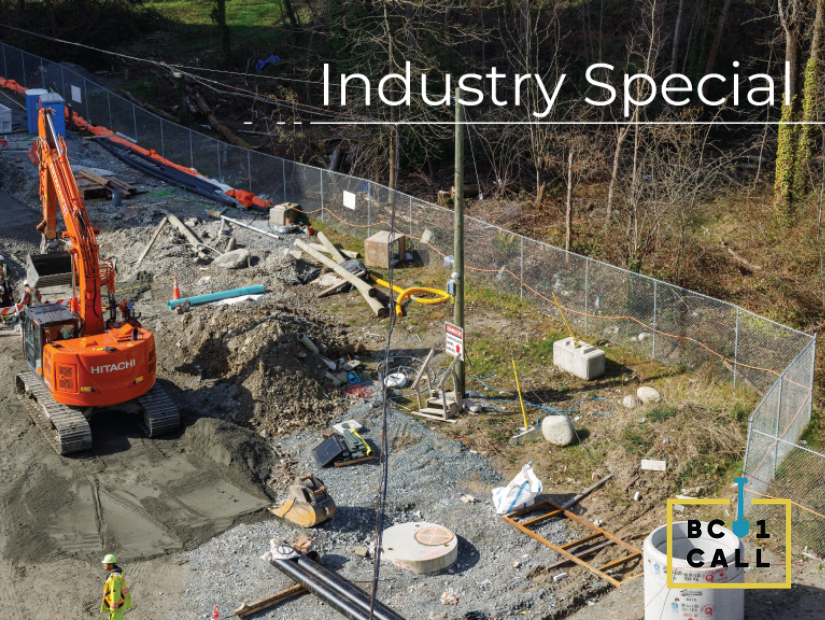
Every project changes two landscapes: the one we can see, and the one hidden beneath our feet.
As the province invests billions in new infrastructure, an increasingly important question is emerging long before construction begins: where will everything fit above ground … and below?
Underground infrastructure is no longer a collection of independent utility systems. In many areas it essentially functions as one interconnected network where modifications to a single asset can affect many others occupying the same corridor. Renewing a municipal water main may require protecting natural gas pipelines, electrical distribution, fibre optic networks, and aging infrastructure installed decades earlier.
Excavations have become an exercise in systems integration, demanding coordination among many independent organizations.
Densification magnifies that challenge. Higher-density housing, transit-oriented communities, and the electrification of transportation demand greater physical volume beneath every city block. Further, it competes for space inside corridors that have not grown with the communities they serve. The underground is quietly becoming one of British Columbia’s most valuable—and most constrained—public assets.

“As BC continues to grow, we have an opportunity to be much more deliberate with the use of corridors we’ve already established. Thoughtful, coordinated planning creates opportunities for infrastructure owners to increase safety while respecting communities and minimizing environmental impact. The more we
coordinate today, the more resilient and sustainable our infrastructure network will be for future generations.”
— Jamie Kereliuk, Vice Chair, BC 1 Call; Director, Environment, Health & Safety, Trans Mountain
That reality is changing the way the industry thinks about underground space. The consequences extend far beyond engineering.
Every additional excavation introduces new risk: operational, financial, and environmental. Crowded corridors increase the likelihood of utility conflicts. Accidental damage to critical infrastructure with the resulting delays are constant concerns for project managers.
Repeated excavation imposes additional environmental stressors: disturbing soil, generating greenhouse gas emissions from heavy equipment and trucking, producing construction waste, and cumulative pressure on surrounding ecosystems. In environmentally sensitive areas, unnecessary ground disturbance can leave its mark long after the work is complete. Better coordination is increasingly recognized as both an infrastructure strategy and an environmental one.
Historically, utilities often completed projects independently. Roads were opened, restored, and reopened months or years later as the next organization arrived to undertake its own work. The public experienced recurring traffic disruptions while contractors encountered rising costs and municipalities struggled to balance competing construction schedules.
What appeared to be isolated projects in the past were symptoms of fragmented infrastructure planning. A different philosophy is steadily gaining momentum.
Rather than managing projects individually, infrastructure owners are increasingly managing corridors collectively. Long-term capital planning is allowing municipalities, utilities, and transportation agencies to identify opportunities for shared excavations, coordinated renewals and synchronized construction schedules years before work begins. Every avoided excavation reduces cost, minimizes disruption, lowers environmental impacts, and extends the life of surrounding infrastructure. The objective is no longer simply to complete projects efficiently but to manage the corridor itself as a shared public asset.
British Columbia already offers an important example of this thinking. The proposed west coast pipeline project, announced by Prime Minister Mark Carney on July 2, 2026, largely follows the existing Trans Mountain corridor through BC, rather than establishing an entirely new alignment across the province. While every major project carries its own considerations, the broader planning principle is increasingly relevant across infrastructure sectors.
Increasingly, infrastructure planning is asking: Where can we build with the least long-term impact?
Existing corridors represent decades of established knowledge and experience. Where appropriate, concentrating compatible infrastructure within those corridors can lessen cumulative impacts.
The same philosophy is beginning to shape projects at every scale. Municipal road reconstruction increasingly incorporates multiple utility renewals before new pavement is installed. Transit investments create opportunities to modernize buried infrastructure simultaneously. New developments are beginning to reserve space for infrastructure that may not be required for decades, recognizing that today’s construction decisions will influence tomorrow’s possibilities.
While technology is making these strategies increasingly achievable, we have not yet achieved the alignment we ultimately require.
Utilities and municipalities are investing in geographic information systems, standardized digital records, high-accuracy surveying, and modern utility mapping standards that create a more complete understanding of the underground environment. Better information allows designers to identify conflicts earlier. Contractors can plan their work more safely and infrastructure owners can make decisions based on a shared understanding rather than incomplete records.
The most successful jurisdictions are discovering that collaboration has become as important as engineering.
Infrastructure owners are strengthening damage prevention practices before construction begins by sharing long-range capital plans, establishing formal coordination committees, improving communication protocols, and participating as members and free BC 1 Call service users. Managing shared space increasingly requires governance that is as integrated as the infrastructure itself.
British Columbia’s future will be built as much below ground as above it. As communities continue to expand, the province’s greatest infrastructure challenge will not simply be building more. Success will depend upon treating underground space as a finite public resource, coordinating investments across organizations, and protecting the natural environment that surrounds every project.
The landscape beneath our feet has always supported life above it. The difference is that today, we can no longer afford to manage it one project at a time.
Next week in Beneath BC
Beyond the Repair: A utility strike is rarely a single event. It is the beginning of a cascade of unexpected consequences.
To read this full series on the Journal of Commerce website please click here.
You must be logged in to post a comment.